
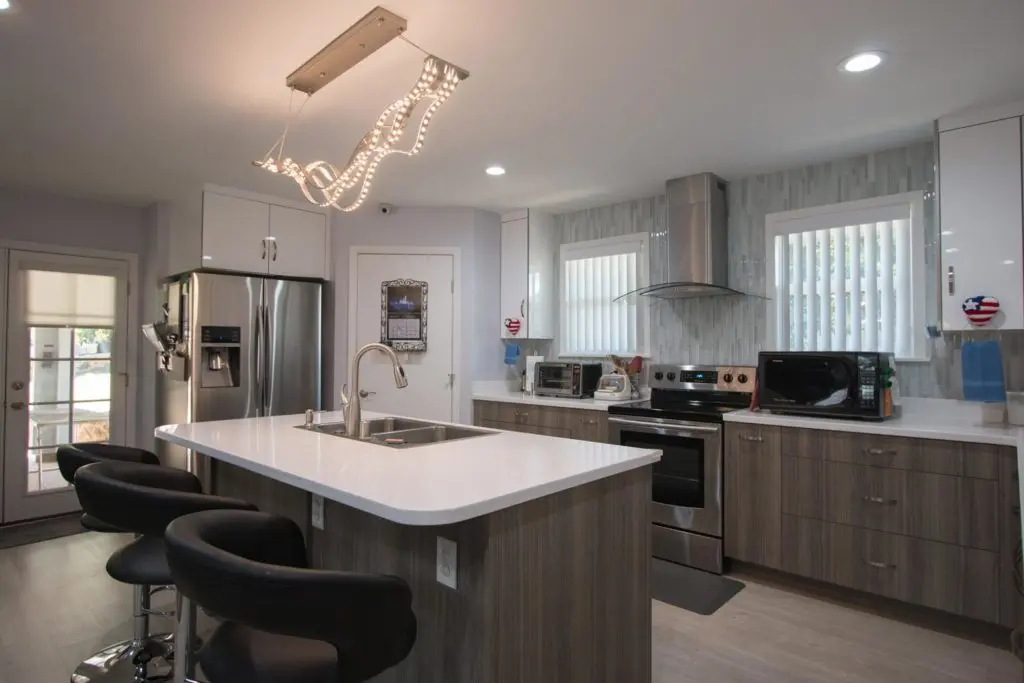
Designing a kitchen in Hawaii isn’t just about picking pretty materials or cool gadgets, it’s about creating a space that fits the way island life really feels. With warm weather, lots of sun, and a strong connection to nature, kitchens in Hawaii need layouts that breathe, materials that last, and styles that blend old and new. Whether you’re cooking for family or hanging out with friends, your kitchen should work smoothly while bringing in those relaxed island vibes. This guide will walk you through easy ideas to make a kitchen that’s modern and practical.
To create a functional, modern kitchen layout in Hawaii, prioritize open floor plans that maximize natural airflow and light to suit the island’s warm climate. Incorporate durable, moisture-resistant materials like locally sourced koa or mango wood cabinetry paired with natural stone countertops, while seamlessly integrating indoor and outdoor spaces through sliding glass doors or lanais to enhance lifestyle and usability.
Creating a Tropical Yet Contemporary Look
The heart of achieving this distinctive style lies in pairing natural, locally sourced materials with sleek, thoughtful design choices. Imagine cabinetry made from rich koa or curly mango wood, woods native to Hawaii that bring with them an organic texture and warmth impossible to replicate with synthetic alternatives. These woods carry not only beautiful grain patterns but also a story deeply rooted in the islands’ heritage, making each piece feel special and authentic.
However, balancing these rustic qualities with modern elements is what keeps your kitchen feeling fresh and functional rather than dated or overly traditional. Smooth surfaces, such as polished stone countertops or quartz in earthy tones, complement the tactile richness of the wood without overwhelming it. For hardware and fixtures, opting for minimalist styles, think matte black handles or brushed stainless steel, creates visual contrast that is clean and contemporary. This juxtaposition allows the natural beauty of the wood to truly shine while maintaining a crisp aesthetic.
Beyond materials, maintaining simplicity in overall layout and design is crucial to embody that easygoing island vibe while embracing modern taste.
Natural Woods and Clean Lines
Locally harvested koa provides more than just warmth; its honey-hued tones and intricate grains serve as a canvas that naturally draws the eye. Curly mango wood, with its distinctive swirls and waves, adds character to flat-panel cabinets or open shelving alike. Integrating these alongside clean lines means steering clear of ornate carvings or heavy moldings in favor of smooth edges and streamlined forms. This approach respects the natural textures without competing against them.
Complementing these woods with finely crafted, European-influenced cabinetry options, such as handle-less doors and soft-close drawers, helps create a harmonious intersection where tradition meets innovation. Selecting moisture-resistant finishes ensures your kitchen withstands Hawaii’s warm humidity without compromising durability or appearance.
Minimizing visual clutter further elevates this balance while enhancing the practical flow needed in compact island kitchens.
Minimalist Design
Embracing minimalism means stripping away unnecessary distractions so function shines without sacrificing style. Handle-less cabinetry not only simplifies cleaning but also visually expands the space by creating uninterrupted surfaces, which is especially valuable in smaller homes where every square foot counts. Integrated appliances keep technology discreet; for instance, induction cooktops flush with countertops blend utility and elegance into one cohesive surface.
Opting for built-in refrigerators behind cabinet panels preserves clean sightlines while allowing for ample storage. Open shelving can be selectively used, showcasing local pottery or tropical plants, to infuse personality without overwhelming space.
Smart lighting choices underscore this design philosophy: recessed LEDs offer unobtrusive illumination aligned with natural light flooding through expansive glass walls or sliding doors leading to lanais. This careful attention to lighting enhances both ambience and practicality without detracting from the serene atmosphere.
Once you have established this tropical yet refined foundation, considering how indoor-outdoor flow works will transform your kitchen into a true island sanctuary where function meets lifestyle seamlessly.
Open Kitchen Layouts for Hawaii Homes
In Hawaii, where the climate invites us to live lightly and openly, designing kitchen spaces that flow naturally is more than a trend; it’s a necessity. Open layouts do more than just enhance aesthetics; they ensure your kitchen feels airy, inviting, and perfectly suited to island living. By minimizing walls and barriers within the kitchen and adjoining rooms or lanais, you create an environment where cool ocean breezes glide freely, reducing reliance on artificial cooling.
The most successful open kitchens strike a delicate balance between spaciousness and practicality. For instance, allowing for at least 42 to 48 inches of aisle width makes moving around comfortable, even during busy meal prep times. This intentional spacing fosters a seamless “work triangle,” the unspoken choreography between sink, stove, and refrigerator that keeps your cooking efficient without cramping the space.
Considering that many homes have compact kitchen footprints averaging around 8×8 feet, designers get creative by integrating islands or peninsulas measuring about 6 to 8 feet long. These elements not only add valuable countertop and storage but also encourage social interaction, so friends and family can gather effortlessly while meals are being prepared.
Perhaps the secret ingredient in these open layouts lies in their ability to merge indoor and outdoor environments. The seamless transition facilitated by floor-to-ceiling glass doors or sliding panels welcomes sparkling daylight and lush garden views inside. This connection expands your kitchen’s perceived size far beyond its physical walls.
Seamless Indoor-Outdoor Connection
Glass pocket doors or expansive sliding panels are design allies in this mission. When opened fully, they dissolve the boundary between your indoor kitchen and outdoor lanai, inviting natural airflow that carries away lingering heat and aromas. Imagine preparing dishes indoors while chatting with guests lounging outside. This fluid connection makes entertaining effortless while welcoming the balmy breeze in Hawaii.
A well-designed kitchen opening directly onto a dining terrace not only brightens the room but also lets the rhythm of island life pulse through every meal. This arrangement echoes the spirit of aloha by facilitating shared moments with loved ones under blue skies or starry evenings.
Smart Ventilation
Yet, as breezes flow freely, so too can unwanted cooking smells if ventilation isn’t handled cleverly. Kitchens benefit greatly from incorporating smart ventilation systems tailored for humid tropical conditions. High-quality range hoods paired with ceiling fans positioned strategically help remove steam and odors swiftly. Properly placed vents direct airflow away from living areas without disturbing cross breezes.
Additionally, energy-efficient exhaust fans with quiet operation keep kitchens comfortable without contributing unwelcome noise pollution, a small detail that significantly enhances everyday comfort in open spaces.
“Ventilation is not just about function but about preserving the freshness that makes island cooking delightful,” one local designer noted.
With a layout that maximizes air flow and openness secured, attention naturally shifts to selecting materials resilient enough to withstand Hawaii’s unique climate while complementing the aesthetic harmony between indoor and outdoor spaces.
Best Kitchen Materials for Hawaii’s Climate
Sustainable materials are at the heart of any thoughtfully designed kitchen. Beyond just style, they represent a commitment to preserving the islands’ delicate ecosystems while celebrating local heritage. Choosing the right materials isn’t merely a trend; it’s a deliberate act of respect and practicality tailored for Hawaii’s humid, salty air.
One standout choice for countertops is locally sourced stone, such as granite or volcanic basalt. These stones aren’t only visually striking with their rich texture and colors, but they are also remarkably resilient to moisture and heat. Volcanic basalt, in particular, holds deep cultural significance as it originates from the very fires that shaped the islands. Installing such materials invites a story into your kitchen, anchoring it both physically and symbolically.
When it comes to cabinetry, the spotlight shifts toward woods certified by the Forest Stewardship Council (FSC) or reclaimed wood salvaged from older homes or buildings in Hawaii. Using these wood options ensures your cabinets not only boast natural elegance but also align with sustainability goals. Their warm grains foster a welcoming atmosphere while reducing demand for new logging, which helps protect Hawaii’s forests.
Another material gaining popularity is bamboo, prized for its rapid renewability and natural resilience. Though technically a grass, bamboo offers hardness comparable to many hardwoods, making it an excellent candidate for flooring or accent walls. Its light amber hues mimic tropical vegetation, blending effortlessly with surrounding décor and bringing an organic vibrance indoors without taxing natural resources.
Alongside choosing sustainable raw materials, pay attention to the finishes and adhesives used in your kitchen construction. Opt for low-VOC (volatile organic compounds) finishes that minimize indoor air pollution, a significant factor in spaces where cooking happens daily. This small detail elevates both environmental responsibility and occupant health.
Incorporating responsibly sourced materials doesn’t limit your design choices but expands possibilities through layered textures and natural color palettes inspired by island life. Mixing stone countertops with bamboo floors or integrating glass-front cabinets alongside reclaimed wood frames allows you to craft a kitchen that feels authentic yet modern.
Here are some quick tips when selecting natural materials for kitchens in Hawaii:
- Prioritize durability against humidity and salt air.
- Choose locally available stones and woods to reduce carbon footprint.
- Ensure all wood is FSC-certified or reclaimed.
- Use eco-friendly finishes compatible with sustainable substrates.
- Combine textures, such as stone with bamboo, to enhance visual interest.
“Using sustainable materials goes beyond aesthetics; it connects us to the land and ensures our kitchens age gracefully while treading lightly on the earth.”
With your kitchen foundation set in harmony with nature, the next step is refining how light and color breathe energy into this space, highlighting its natural beauty while crafting an inviting atmosphere.
Colors and Lighting Strategies
Colors and lighting do more than decorate your kitchen; they set the atmosphere, influence how spacious it feels, and even affect your mood while cooking. In kitchen design in Hawaii, embracing hues drawn directly from the islands’ surroundings instantly grounds the space in nature. Shades like emerald green recall lush rainforests, ocean blues echo the vast Pacific, and fiery sunset oranges bring warmth reminiscent of twilight skies.
These tones don’t just look beautiful; they subtly connect you to Hawaii’s vibrant environment every time you step into your kitchen.
When selecting colors, think beyond mere paint or cabinetry finishes. Your backsplash, countertops, and even dishware can carry these nature-inspired shades to weave a cohesive narrative throughout the space.
For example, an azure blue backsplash not only beautifies but also invokes coolness, balancing out the warmth of wooden elements. Pairing seafoam green cabinets with neutral countertops creates a soothing coastal vibe that is both refreshing and timeless.
But color alone isn’t enough; how you manage light is equally pivotal to achieving that welcoming feeling woven deeply into a style in Hawaii.
Natural light plays a starring role in making any kitchen feel open and alive. Large floor-to-ceiling windows are ideal, offering panoramic views, openness, and flooding the space with abundant daylight without sacrificing privacy if positioned thoughtfully. Clerestory windows that sit high on walls also bring in sunlight while preserving wall space for storage or design features.
To amplify daylight’s effect inside, opt for white or pale-colored cabinetry that reflects rather than absorbs light. This reflection not only brightens dark corners but also visually expands the room, making even modest kitchens feel generous and airy.
Combined with natural woodgrain textures, this approach strikes a balance between brightness and organic warmth, a hallmark of well-crafted kitchens.
Another smart move is layering your lighting: incorporate statement chandeliers or sculptural pendants over islands as eye-catching focal points that add both style and practical illumination.
Utilize concealed LED strips under counters or inside ribbed glass cabinets to create ambient glows that emphasize texture and depth without cluttering sightlines.
The latest trend towards smart lighting systems adds effortless control over brightness and color temperature throughout your day, from energizing cool whites in the morning to soft warm glows for relaxed evenings.
This flexibility matches perfectly with Hawaii’s ever-changing natural light cycles, allowing indoor ambiance to mirror outdoor moods seamlessly.
By weaving together island-inspired colors with layered, thoughtfully placed lighting, you create a kitchen that goes beyond aesthetics; it becomes a living environment resonating with comfort, beauty, and function all at once.
Bringing this harmony of color and light to life paves the way for enhancing your kitchen further by introducing fresh greenery and vibrant plant life, amplifying its connection to nature.
Integrating Greenery and Plants
Bringing plants into your kitchen is more than just decoration; it’s about creating a connection with nature that reflects Hawaii’s lush environment. Indoor plants improve air quality, add refreshing shades of green that soften hard surfaces, and infuse your space with serenity. In tropical climates like Hawaii’s, choosing the right plants means thinking about humidity, light exposure, and space efficiency to maintain health and vitality in your greenery.
One of the easiest ways to integrate plants is by cultivating an indoor herb garden. Placing fresh herbs such as basil, mint, or cilantro on a windowsill provides not only culinary convenience but also stimulates the senses with their vibrant aroma and texture. A vertical garden on an unused kitchen wall can transform bland spaces into lively focal points while maximizing limited space. This vertical approach is especially practical in compact kitchens, often around 8×8 feet, allowing greenery without sacrificing counter or floor space.
For decorative plants that thrive indoors and require minimal upkeep, consider species like ferns, orchids, and philodendrons. Ferns flourish in Hawaii’s typically humid conditions and add rich texture with their feathery fronds. Orchids offer elegant pops of color and are well-suited for bright indirect light common near lanais or kitchen windows. Philodendrons adapt well to variable light conditions and provide broad leaves that balance clean lines of modern cabinetry with soft, natural curves.
To maintain thriving kitchen plants in a home, consistent attention to watering schedules is essential but manageable. For example, monsteras and ferns often need weekly watering due to the warm climate accelerating evaporation, whereas orchids require moisture every seven to ten days. Using natural materials for planters, such as bamboo or rattan, enhances authenticity while helping regulate soil moisture better than plastic containers. Avoid placing plants too close to heat sources like ovens or vents to prevent drying out the foliage. This small detail keeps your greenery healthy longer.
Studies show that indoor plants can reduce airborne pollutants by up to 20%, which is especially valuable in kitchens where cooking odors tend to linger in tropical humidity. The fresh oxygen release also promotes a sense of calm and well-being during meal prep or family gatherings on adjacent lanais.
To optimize natural light exposure while preserving storage space, consider placing plants near corner windows or open shelving illuminated by transom windows, areas where they soak up ample daylight without interfering with workflow.
Aligning plant choices with your kitchen’s materials amplifies harmony; plants in woven baskets complement hand-carved koa wood accents beautifully. Meanwhile, glossy granite countertops provide an ideal moisture-resistant surface for routine watering without water damage risks. The interplay between organic greens and natural stone creates a tactile balance that evokes Hawaii’s volcanic landscapes indoors.
Edging beyond leafy accents, integrating natural elements reveals deeper layers where functionality meets aesthetic charm, leading to a fuller understanding of how design choices breathe life into island kitchens.
Functional and Aesthetic Elements
Functional design doesn’t have to sacrifice aesthetics; your kitchen should work hard and look inviting at the same time. Consider smart storage solutions that maximize every inch of available space while maintaining clean lines and uncluttered surfaces.
For instance, European-style cabinetry equipped with pull-out pantries allows you to tuck away staples neatly yet access them effortlessly. Vertical storage options capitalize on otherwise unused wall heights, turning tight spaces into organizational triumphs.
Imagine reaching for a spice jar on a pull-out carousel tucked inside a corner cabinet. What once was a neglected spot now becomes a practical asset. Such thoughtful storage brings ease and flow to your cooking routine without compromising on style.
When planning these storage features, it’s important to think beyond mere capacity. Accessibility is key; pull-out drawers and carousels ensure you won’t be straining or bending awkwardly in search of a pot or ingredient. Prioritizing convenience here makes everyday tasks smoother, reducing frustration and boosting efficiency.
Alongside functionality, weaving aesthetic accents steeped in heritage lends character and warmth unique to your space.
Traditional craftsmanship in Hawaii offers rich inspiration for adding distinct artistry to your kitchen’s look. Hand-carved Koa wood accents, for example, bring natural textures and deep golden hues that celebrate local artistry while complementing contemporary design elements beautifully.
Incorporating custom-stained finishes on cabinetry or island bases can echo this warmth throughout the room, creating a cohesive feel grounded in place.
Displaying carefully chosen items such as local pottery or treasured family heirlooms on open shelving provides a gentle narrative, a blend of history and personal story woven right into the kitchen atmosphere. These meaningful touches invite connection and infuse each meal preparation with a sense of belonging.
To keep the space balanced, place these artisan details thoughtfully rather than overcrowding surfaces; allow them room to breathe so their craftsmanship can truly shine without overwhelming functionality.
If you’re planning a kitchen remodel in Honolulu or anywhere on Oahu, working with a trusted home renovation contractor makes all the difference. HK Construction is a local design and construction company specializing in home remodeling services, including kitchen renovations, home additions, and full home upgrades across Hawaii. Our team understands island living, climate-ready materials, and functional layouts that elevate your space. Contact HK Construction today at (808) 841-1800 to speak with an experienced kitchen remodeling contractor in Honolulu and start designing a kitchen built for island life.